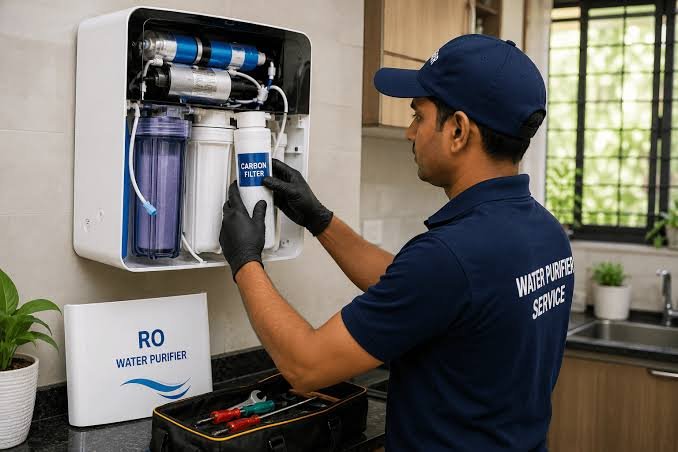
RO water purifier servicing is usually scheduled every 6-12 months. However, every water purifier filter stage has its own maintenance cycle. For example, the sediment filter should be replaced every 3-6 months and the RO membrane every 2-3 years, based on how hard your water is. No one-size-fits-all water purifier servicing schedule exists. Moreover, when you want to replace water filters varies by consumption. Large families may need to replace filters within a year, while households with low water consumption can delay servicing.
So, how often does your water purifier need servicing? It depends on the filter stage, water quality, and how many litres the household uses daily. Here, we will break down the water purifier servicing by stage. We will also mention what happens if you rent a water purifier instead of buying one, since servicing becomes a part of the monthly subscription.
What is Included in Water Purifier Servicing?
A regular water purifier servicing includes checking the water path from the inlet to the storage tank. Servicing isn’t just about replacing filters. The technician further checks the TDS reading.
| Service task | What the technician does | Why it matters |
| Sediment filter check | Inspects or replaces the sediment cartridge | Traps sand, rust and silt before they reach the membrane |
| Carbon filter check | Replaces the pre- or post-carbon cartridge if due | Removes chlorine taste and odour |
| Membrane inspection | Tests output TDS and flow rate | Shows whether the RO membrane is still rejecting dissolved solids |
| UV or UF check | Tests the UV lamp or flushes the UF membrane | Confirms the disinfection stage is working |
| Tank cleaning | Drains and wipes the storage tank | Stops build-up in water that sits between uses |
| Leak and pressure check | Inspects pipes, joints and the booster pump | Catches small faults before they need an RO repair service |
How Often Do You Need RO Servicing for Each Filter Stage?
RO purifier servicing requires a routine check-up, which is usually done every 3-6 months. Then the replacement cycle for each cartridge comes; it varies by stage. Poor water input can reduce a water filter’s lifespan.
| Filter stage | Typical replacement interval | What wears it out |
| Sediment filter | 6 to 12 months | Sand, silt and rust from pipes and overhead tanks |
| Pre-carbon filter | 6 to 12 months | Chlorine and organic matter |
| RO membrane | 2 to 3 years | Dissolved salts and scaling from hard water |
| Post-carbon filter | Around 12 months | Final taste and odour polishing |
| UV lamp | Around 12 months | Output fades with hours of use, even while the lamp still glows |
| UF membrane | 1 to 2 years | Fine suspended particles |
| Mineral cartridge | Around 12 months | Gradual exhaustion of the added minerals |
When to Replace Sediment and Carbon Stages
Replacing the sediment and carbon stages is a recurring cost of owning a water purifier. A sediment filter that turns orange or brown after six months of use still does its job. However, it is also full. Skipping replacement puts a load on the membrane, an expensive part of the unit.
Lifespan of an RO Membrane
An RO membrane lasts 2-3 years in a house with moderate TDS. For high-TDS areas, the membrane wears out within a year. A clear sign to change an RO membrane is when TDS rises over 2-3 services. This can happen even with fresh pre-filters.
What are the Signs to Change the RO Water Filter?
Changing the RO water filter does not always depend on the scheduled visit. The purifier shows signs that it’s time to change the filter. A basic TDS reading also helps.
| Sign | Likely cause | What to do |
| Slower flow into the tank | Clogged sediment filter or membrane | Book a filter check |
| Change in taste or smell | Exhausted carbon filter | Replace the carbon stage |
| Rising output TDS | Worn RO membrane | Test, then replace the membrane if confirmed |
| Purifier runs without stopping | Low input pressure or a weak pump | Ask for a pump and pressure check |
| Water around the base | Loose joint or cracked housing | Shut the inlet and call a technician |
RO purifier maintenance differs from RO repair service. Maintenance happens on schedule, and repair service only happens after a fault appears. Typical maintenance includes changing filters and testing TDS. For repair, the technician checks for leaks or pump issues. Since the maintenance is included in the AMC, the charges are predictable.
What Changes for Water Purifier Servicing When Renting?
When you own a purifier, you need to track dates and book visits. Getting a water purifier for rent works the opposite way. Platforms such as Rentomojo include repairs in the plan; the monthly subscription plan covers filter replacement. For repairs, users can raise a request online, and a technician visits within 24-48 hours. Also, the water purifier installation includes a technician testing the water TDS.
What to Check When Choosing a Rental Plan
Ask the rental provider about filter changes. Ask whether the cartridges are included, and how often they need to be replaced. You can also ask how long the platform takes to address the issue and whether it considers water filter replacement for a borewell supply. The answers are enough to tell you whether the plan will offer quality service.
Last-Minute Thoughts
Whether you rent or buy, plan for routine RO water purifier servicing every 3-6 months. Change the sediment and carbon stages every 6-12 months. The frequency may vary depending on the water supply – borewell or tanker water. If you are unsure how often you should service the water purifier, a TDS reading can give you some hints. On-time filter replacement protects the membrane, which is the most expensive part of the unit. Owners need to track the service schedule, while rental platforms handle it all.